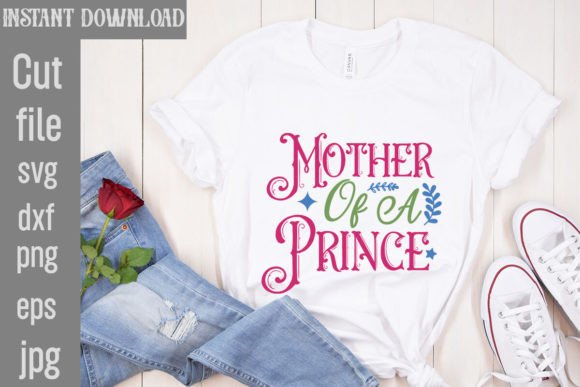
Mother of a Prince SVG: An Embroidery Review
As a professional designer who bridges the gap between digital assets and tangible textiles, I approach every new file with a healthy dose of skepticism. When evaluating the Mother of a Prince SVG Cut File, my first thought isn't just about how it looks on a screen, but how it will behave under the needle. This digital download includes SVG, DXF, EPS, and high-resolution PNG files, making it a versatile asset for vinyl cutters and sublimation printers. However, for those of us in the embroidery space, this graphic serves as a foundational blueprint. Before you load this design into your digitizing software or purchase a pre-digitized version based on this art, it is vital to understand its practical application for real-world projects like custom apparel, baby gifts, and boutique merchandise.
First Impressions and Visual Hierarchy
The initial appeal of the Mother of a Prince SVG Cut File lies in its clear thematic identity. It strikes a balance between regal elegance and maternal warmth, avoiding the overly cutesy aesthetic that can sometimes alienate adult customers. The typography and iconography suggest a design that demands respect rather than just attention. As a graphics asset intended primarily for T-shirt designs, the lines are clean and bold, which is excellent news for embroiderers. Clean vector lines translate significantly better to stitch paths than rasterized, sketchy artwork. The visual personality here feels established and confident, making it suitable for high-value handmade products where perceived quality drives sales.
Translating Vectors to Stitch: A Sweatshirt Case Study
To truly evaluate this design, I mentally placed it on a heavyweight cotton sweatshirt, a staple for Etsy sellers and small shop owners. In this scenario, the Mother of a Prince SVG Cut File acts as the perfect center chest motif. Because the original file is a vector graphic, scaling it up for a sweatshirt embroidery project maintains crisp edges without pixelation. However, translating a flat graphic to texture requires strategic thinking. If I were digitizing this for fleece, I would avoid using a standard satin stitch for large solid areas. Fleece has significant pile, and dense satin stitches can sink into the fabric texture, causing the design to look uneven or disappear entirely.
Instead, this design calls for a combination of fill stitches and running stitch outlines to maintain definition on plush fabrics. For the text elements within the design, ensuring adequate spacing between letters is non-negotiable. On a sweatshirt, thread tension can pull letters together if they are too close in the digital file. By respecting the negative space inherent in this SVG, the finished product retains readability and professional polish. This level of foresight is what separates a hobbyist attempt from a commercial-grade embroidered patch or garment that customers trust.
Navigating Fabric Limitations and Hoop Constraints
While the Mother of a Prince SVG Cut File is versatile, it requires careful handling depending on your substrate. Not all fabrics are created equal, and this design’s intricacy dictates where it should live. For baby embroidery projects on delicate onesies or knit caps, size reduction is often necessary. Here, caution is paramount. If the design contains fine serifs or thin connecting lines, reducing it below a certain threshold may result in thread breaks or illegible text. Always check the minimum viable size before committing to a production run on infant wear.
Textured fabrics like terry cloth towels or waffle-knit blankets present another challenge. The high contrast required for this design to pop means you must select thread colors wisely against the fabric texture. A dark navy design on a black towel will fail regardless of stitch quality. Furthermore, curved surfaces like caps require specific distortion compensation. Since this is originally a flat graphic for T-shirt designs, applying it to a structured hat without adjusting for the curve will result in distorted lettering at the top and bottom edges. Stabilizer choice becomes critical here; using a tear-away on stretchy knits or a cut-away on unstable weaves ensures the design doesn't pucker during the stitching process.
Commercial Viability for Makers and Sellers
For creative entrepreneurs and Etsy sellers, the value of an embroidery file extends beyond aesthetics; it encompasses marketability and brand consistency. The Mother of a Prince SVG Cut File offers strong giftability. It targets a specific emotional niche—new mothers and royal-themed nurseries—which allows for higher price points compared to generic graphics. When used for personalized gifts, such as a custom tote bag design for a baby shower, the recognizable theme adds immediate perceived value. Customers aren't just buying a bag; they are buying an identity marker.
However, professionalism hinges on execution. A poorly stitched version of this design can damage buyer engagement and trust. Before listing any finished product, test the design in both black and white mockups to ensure contrast holds up in photography. Digital product previews should accurately represent how the stitch density interacts with light. If you are selling the physical item, consistent placement across multiple units establishes brand reliability. Whether you are creating holiday embroidery for seasonal markets or year-round boutique branding, this design asset supports a cohesive collection when applied with technical discipline.
Essential Designer Notes for Production Success
Based on my review of the Mother of a Prince SVG Cut File as a source for embroidery, I recommend the following practical steps to ensure your projects meet professional standards:
- Verify Licensing Terms: The product description confirms this is a digital download with specific file formats, but it does not explicitly state commercial embroidery rights. Always confirm whether you can sell finished embroidered items or if the license restricts use to personal projects or digital resale only.
- Test Stitch Density: Never assume the auto-digitize function will handle this graphic perfectly. Run a test stitch-out on scrap fabric identical to your final project to check for puckering, thread breaks, or registration issues.
- Evaluate Thread Color Contrast: View your thread palette against the actual fabric in natural lighting. What looks good on a monitor may lack depth in reality, especially for detailed accents.
- Confirm Hoop Size Compatibility: Ensure the scaled design fits comfortably within your machine’s maximum embroidery area with adequate margin for stabilizer clamping. Over-stretching fabric to fit a hoop leads to distortion.
- Inspect Small Details: If adapting this for patches or small tags, verify that internal cutouts and letter counters remain open after stitching. Closed loops in tiny text ruin legibility.
- Mockup Realistically: Use printable mockup templates that show fabric grain and shadow. Flat digital previews mislead customers about the tactile nature of embroidery.
- Stabilizer Selection: Match your backing to the fabric weight and design density. A dense fill stitch version of this design requires robust support to prevent tunneling on lightweight tees.
The Mother of a Prince SVG Cut File is a robust starting point for makers who understand the translation from screen to stitch. Its clean geometry and strong thematic resonance make it a valuable addition to a commercial embroidery library, provided it is treated with the technical respect that textile art demands. By prioritizing fabric behavior, testing rigorously, and honoring licensing boundaries, you can transform this digital graphic into a premium handmade product that resonates with customers and elevates your craft business.